

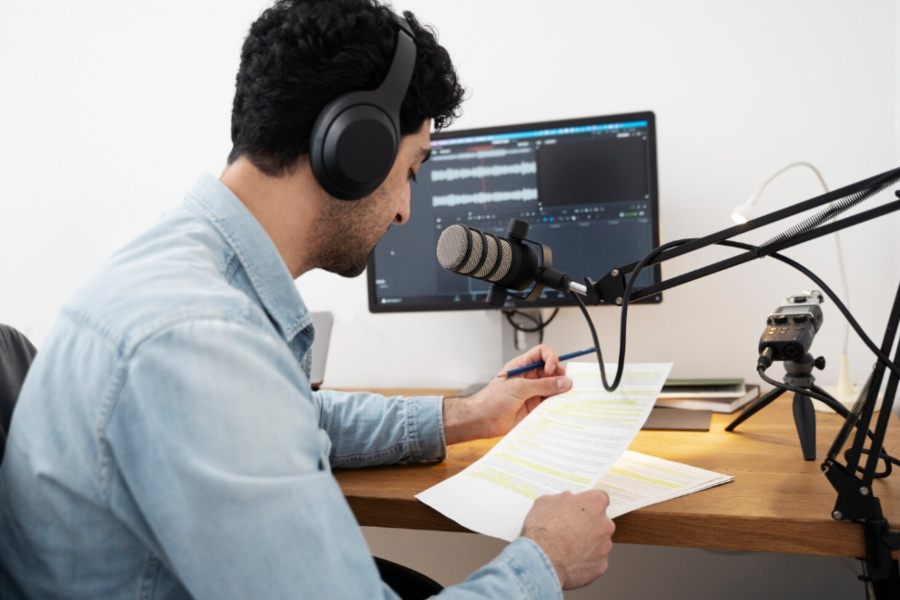
Most people assume that dubbing starts at the recording booth, with glowing microphones, voice actors, and sound engineers – which is definitely part of the process, but not the starting point.
In reality, dubbing starts much earlier. A script acts as a form of guidance and the backbone of a studio-quality dub, especially when it’s written in a way the dubbing team or tool can actually use. Because the quality of the script directly affects the quality of the dub.
If you want your project to sound polished, natural, and perfectly synced, here’s what makes a simple script ready for dubbing.
Clear and Natural Dialogue
Text that reads well on a page doesn’t always sound good out loud. That’s why reading your written content out loud is classic advice for maintaining a conversational and cohesive tone. Video dubbing especially requires dialogue that flows like real speech, free of jargon or stiff sentences.
A phrase may look good, but not roll well on the tongue when spoken. A dub-ready script uses short sentences, contractions, conversational phrasing, and vocabulary that suits the character, setting, and tone of the video. If a sentence is too long or tiring to speak, rewrite it.
Visual Matching
A dub reaches studio quality when the voice is synced to the visual. If the text doesn’t match what’s happening on the screen, the entire dub feels off. A good script aligns every line with the exact moment the character starts speaking, notes pauses and cues, and breaks dialogues where needed.
Professionals often use a two-column script, commonly known as the A/V (Audio/Visual) format. The visuals are on one side, and the dialogues on the other. It saves time and prevents awkward mismatches. Even if the script is simple, it needs to respect the timing of the video.
Emotional and Performance Notes
Whether you’re working with a professional voice actor or a dubbing tool, context matters. Dubs are more about acting than reading, and adding performance notes helps. Do so for lines that change meaning based on emotions.
For example, you could use notes like (whispers), (shaky voice), or (out of breath) to indicate the right tone and consistency for the software or human in charge of dubbing. If there are more than two people in the video laughing or arguing, the script should say so to avoid confusion or discord.
Character Descriptions
Even a short description of the character in the video helps find the right tone for dubbing. Things like energy level, speech style, accent, and even quirks make a difference. A line delivered by a calm middle-aged man will not sound the same when delivered by a teenage student.
The script should tell what the dubbing person or tool has to become. It’s one of the most underrated parts of preparing a script, and one of the reasons amateur dubs often feel off.
Consistent Terminology
If you’re working on a technical piece and your script contains repeated terms, they should be consistent everywhere. This advice applies to brand names, jargon, product names, and proper nouns.
Otherwise, you’ll get a different term every scene, which could throw off the listeners or viewers. A dub-ready script also includes a mini glossary or notes for pronunciation and consistency. It’s an essential part of quality control.
Pauses and Breathing Space
New writers often cram dialogue into long blocks. But natural speech has breath rhythm, hesitation, and pacing. A good script begins with concise writing, marking pauses, beats, short breaks for reactions, and moments where the voice actor needs to take a breath.
Adding intentional spaces also helps the final audio sound more natural.