

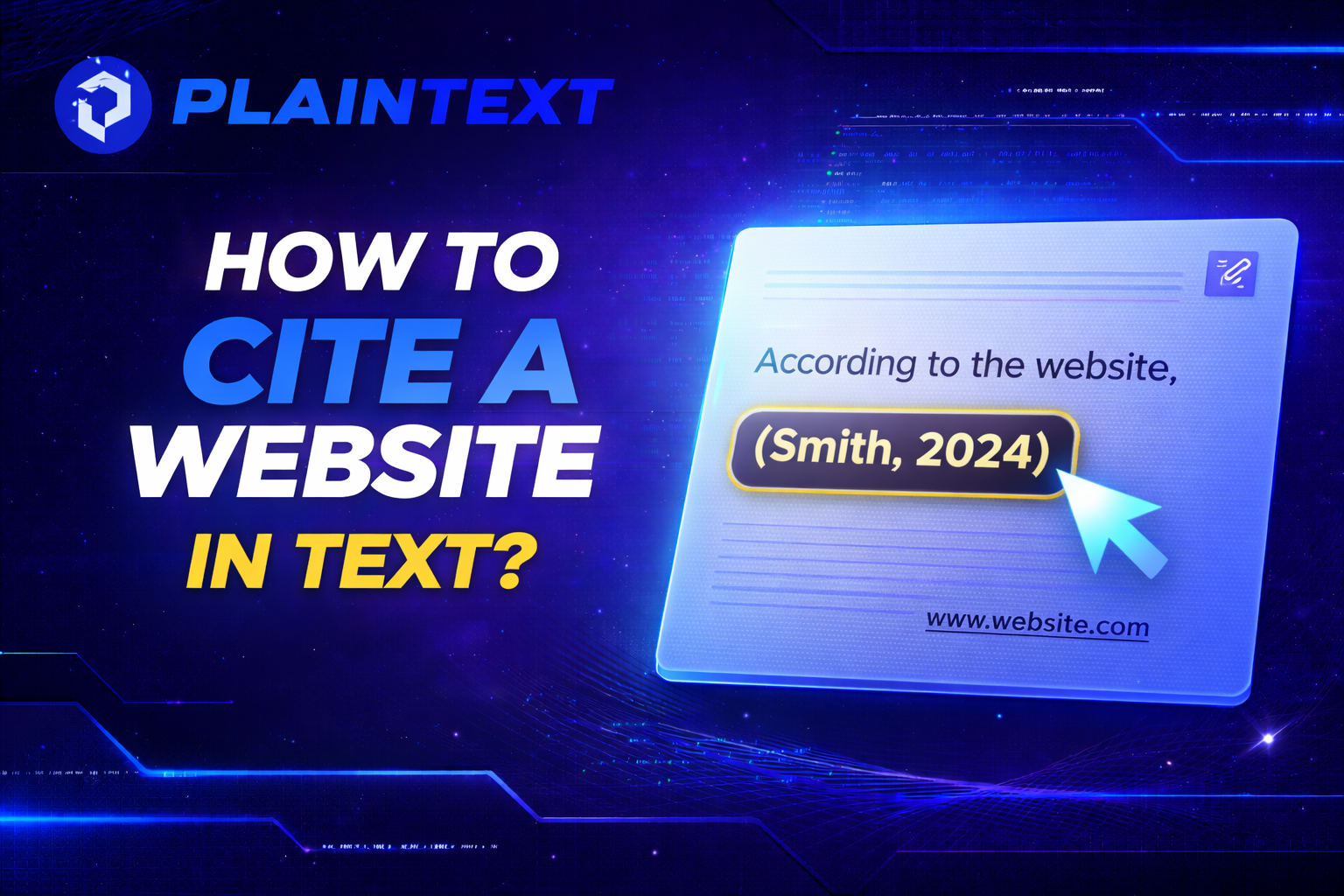
Writing academic, professional, or informational content often requires you to reference ideas that come from online sources. When you use information from a website, you need to show readers where that information came from without disrupting the flow of your writing. Knowing how to cite a website in text helps you maintain credibility, avoid plagiarism, and guide readers to the original source.
Many writers feel unsure about in-text citations because different styles use different rules and formats. This confusion often leads to inconsistent or incorrect citations that weaken otherwise strong content. By understanding the logic behind in-text website citations, you can apply the rules confidently in any context.
What It Means to Cite a Website in Text
Citing a website in text means giving brief source information directly within your sentence or at the end of it. This short reference tells the reader that the idea, fact, or quote comes from an online source rather than your own original thinking. The goal is clarity without clutter, so the citation supports your writing instead of interrupting it.
In-text citations work together with a full reference or works cited list at the end of your document. The in-text citation points the reader to the correct entry, making it easy to locate the full source details. When done correctly, this system builds trust and transparency throughout your writing.
Why In-Text Website Citations Matter
In-text website citations protect you from unintentional plagiarism by clearly showing where borrowed ideas originate. Even when you paraphrase, you still need to signal that the information is not entirely your own. This practice is essential in academic, professional, and online publishing environments.
Citations also strengthen your argument by showing that your claims are supported by credible sources. Readers are more likely to trust content that clearly references reliable information. Over time, consistent citation habits improve both your writing quality and your reputation as a careful researcher.
Common Information Used in Website In-Text Citations
Most in-text website citations rely on a small set of core details. These usually include the author name, organization name, or page title, along with the publication year if available. The exact combination depends on the citation style you are using.
When a website does not list an individual author, the organization responsible for the content often takes that role. If neither is available, a shortened version of the page title is used instead. This flexibility ensures that you can still cite web content even when details are limited.
How to Cite a Website in Text Using Author Names
When a website clearly lists an individual author, the author’s last name becomes the main identifier in the in-text citation. You usually place this name in parentheses at the end of the sentence or integrate it naturally into the sentence itself. This method keeps the citation brief while still being precise.
If you mention the author directly in your sentence, you typically only need to include the year or other required detail in parentheses. This approach improves readability and prevents repetitive wording. It also helps your writing sound more natural and less mechanical.
How to Cite a Website in Text Without an Author
Many websites do not list a specific author, which can confuse writers who are new to citations. In these cases, you use the organization name or a shortened page title in place of the author. This ensures that the reader can still identify the correct source.
When using a page title, keep it short and recognizable so it matches the reference list entry. Quotation marks are often used around the shortened title, depending on the style guide. This method maintains consistency while adapting to incomplete source information.
How to Cite a Website in Text Without a Date
Some web pages do not show a clear publication or update date. When this happens, citation styles allow you to indicate that no date is available rather than guessing. This approach keeps your citation honest and accurate.
In-text citations without a date still serve their purpose by identifying the source. Readers understand that online content can be undated, especially informational pages or long-standing resources. Accuracy is always more important than filling in missing details.
Differences Between Major Citation Styles
Different citation styles handle website in-text citations in slightly different ways. Some styles emphasize the author and year, while others focus on the author and page or section number. Understanding these differences helps you apply the correct format for your assignment or publication.
Despite these variations, the underlying principle remains the same across styles. You are signaling to the reader that the information comes from a specific online source. Once you grasp this core idea, switching between styles becomes much easier.
Using Website In-Text Citations in Academic Writing
In academic writing, precision and consistency are essential. In-text website citations should appear immediately after the borrowed idea, not at the end of a paragraph covering multiple sources. This placement removes any ambiguity about which source supports which claim.
You should also ensure that every in-text citation has a matching entry in your reference list. Missing or mismatched citations can reduce the credibility of your work. Careful cross-checking saves time during revisions and grading.
Using Website In-Text Citations in Online Content
Online articles and blog posts often blend research with conversational writing. In-text website citations still matter, especially for factual claims or data-driven statements. They show readers that your content is well-researched and trustworthy.
When writing for the web, you may also need to think about formatting and readability. Clear citations help readers follow your sources without feeling overwhelmed. This balance is particularly important when explaining technical or educational topics.
Integrating In-Text Citations Smoothly
Smooth integration of in-text citations improves the overall flow of your writing. You can often introduce the source naturally in the sentence rather than relying only on parentheses. This technique makes your content more engaging and easier to read.
Varying your sentence structure also helps avoid repetitive citation patterns. Some sentences can mention the source directly, while others use parenthetical citations. This variety keeps your writing from sounding formulaic.
Avoiding Common In-Text Citation Mistakes
One common mistake is including too much information in the in-text citation. Long URLs or full titles do not belong in the body of your text. Keeping citations short and focused improves clarity.
Another frequent issue is inconsistent formatting across citations. Mixing styles or forgetting required elements can confuse readers. Following one style guide consistently eliminates these problems and keeps your writing polished.
In-Text Citations and Plain Text Formatting
When working with online editors or content tools, formatting issues can affect how citations appear. Understanding what is plain text format helps you preserve citation clarity when copying or pasting content. Clean text ensures that parentheses, quotation marks, and spacing remain intact.
If you often move content between platforms, learning how to copy and paste without formatting can save time and prevent errors. This habit is especially useful when drafting citations in shared documents or content management systems. You can explore practical tips for this in a guide on how to copy and paste without formatting.
How Context Affects Website In-Text Citations
The context of your writing determines how detailed your citation needs to be. A direct quote usually requires more precise identification than a general paraphrase. Understanding this distinction helps you choose the right level of detail.
Context also affects whether you integrate the citation into the sentence or place it at the end. Both options are correct when used appropriately. The key is making sure the reader can clearly trace the information back to its source.
Matching In-Text Citations With Reference Entries
Every in-text citation should match exactly with an entry in your reference list. The name or title used in the citation must correspond to the first element of the full reference. This consistency allows readers to locate the source quickly.
Double-checking this alignment is an essential editing step. Even small mismatches can create confusion or appear careless. Careful review ensures your citations support your writing effectively.
In-Text Citations for Websites With Long Titles
Some web pages have very long or descriptive titles. In these cases, you only use a shortened version of the title in the in-text citation. The shortened form should still be recognizable and unique.
Choosing the right words for the shortened title makes a big difference. It should clearly point to the correct reference entry without causing confusion. This practice keeps your text clean and readable.
Practical Examples of Website In-Text Citations
Seeing how in-text citations work in real sentences makes the rules easier to understand. For example, you might mention an organization in the sentence and include the year in parentheses. This approach keeps the citation subtle and effective.
Another option is placing the full citation in parentheses at the end of the sentence. Both methods are valid when used correctly. The key is consistency throughout your document.
Editing and Reviewing Your In-Text Citations
Editing citations should be part of your final review process. Read each sentence and confirm that any borrowed idea has a clear citation. This step prevents accidental omissions.
You should also check for uniform formatting across all citations. Consistent spacing, punctuation, and structure improve professionalism. A careful review ensures your work meets high standards.
Tools That Help With Citation Accuracy
Many writers use tools to manage citations, but understanding the rules yourself is still important. Tools can help format citations, but they are not always perfect. Knowing the logic behind in-text citations allows you to catch and fix errors.
When working with different text formats, understanding the difference between plain text and rich text can also help preserve citation accuracy. You can learn more about this distinction by reading what is a plain text format. This knowledge is especially useful when moving content between editors.
Applying In-Text Citation Skills Across Projects
Once you understand how to cite a website in text, you can apply the skill across many types of writing. Academic papers, blog posts, reports, and guides all benefit from clear source attribution. This versatility makes citation knowledge a long-term asset.
Practicing consistently helps the rules become second nature. Over time, you will spend less time checking guidelines and more time focusing on your ideas. Strong citation habits support strong writing overall.
Final Thoughts
Learning how to cite a website in text is about more than following rules. It is about respecting sources, guiding readers, and strengthening your writing. Clear in-text citations show that your work is thoughtful and well-researched.
By applying consistent methods, adapting to missing information, and reviewing your citations carefully, you can handle website sources with confidence. These skills help you produce writing that is accurate, readable, and trustworthy for any audience.