

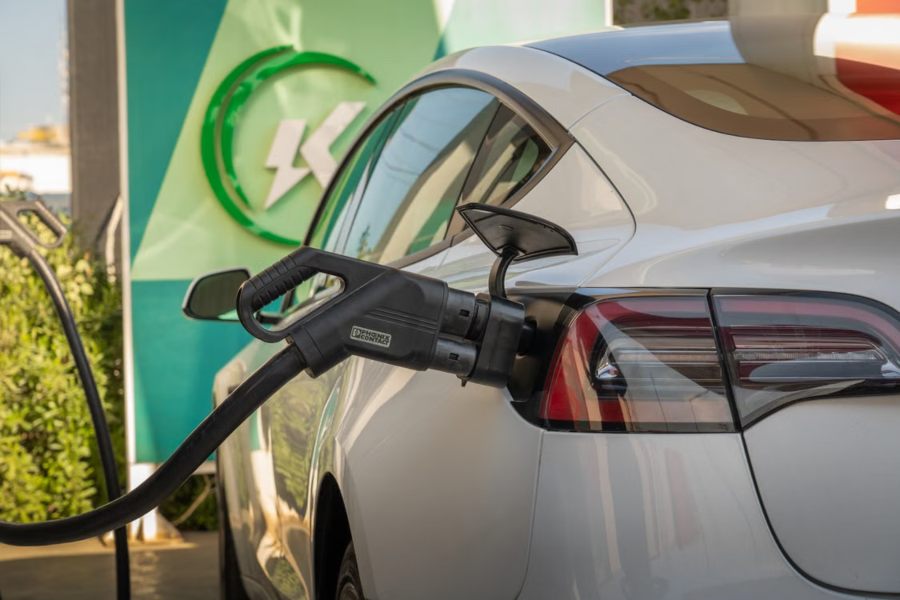
Electric vehicles have moved from a niche curiosity to a mainstream purchase decision, and that shift is reshaping what renters expect from the buildings they live in. A few years ago, a parking garage with a couple of charging stations felt like a bonus. Today, it’s quickly becoming table stakes — right alongside in-unit laundry and high-speed internet. For property owners and managers, the question is no longer whether to install EV charging, but how to do it in a way that’s cost-effective, scalable, and genuinely useful to residents.
The Renter Demand Is Real
Roughly one in five new vehicle sales in the U.S. now includes some form of electrification, and that share keeps climbing every quarter. Unlike single-family homeowners, apartment and condo residents can’t just install a charger in their own garage. They depend entirely on their building to provide that infrastructure. This creates a straightforward but powerful dynamic: properties with reliable charging access have a real edge in attracting and retaining EV-owning tenants, while properties without it risk losing those renters to a competitor down the street.
Surveys of prospective renters consistently show that charging availability now ranks among the top amenities people search for, especially in urban and suburban markets where EV adoption is highest. For property managers, that means EV charging isn’t just a sustainability initiative anymore — it’s a leasing and retention tool with a measurable impact on occupancy and rent premiums.
Why Multifamily Charging Is Different From Single-Family
Installing a charger in a private garage is relatively simple: one owner, one vehicle, one meter. Multifamily properties are a different animal entirely. You’re dealing with shared electrical infrastructure, multiple residents who may or may not have EVs yet, parking assignments that change over time, and the need to fairly allocate electricity costs across tenants who use vastly different amounts of power.
There’s also the capacity question. Many older multifamily buildings simply weren’t wired with enough electrical headroom to support a bank of chargers without significant panel upgrades or utility coordination. That’s why a growing number of property owners are moving toward phased rollouts — installing the conduit and infrastructure for a full parking field up front, but only activating chargers as demand grows. This “make-ready” approach spreads out capital costs while still giving the property a clear runway to scale.
Billing is another layer multifamily owners have to solve that single-family homeowners never think about. Should charging be included in rent? Metered per kWh? Charged as a flat monthly fee regardless of usage? Each approach has trade-offs in terms of fairness, complexity, and revenue potential, and getting it wrong can lead to resident frustration or thin margins for the property.
Financing and Ownership Models
One of the biggest hurdles for property owners has historically been upfront cost. Trenching, panel upgrades, conduit, and hardware can add up quickly, especially across a large parking structure. Fortunately, the financing landscape has matured. Turnkey providers now commonly offer models where the charging company covers some or all of the capital expense in exchange for a share of usage revenue, or where the property owner pays a modest monthly fee instead of a large upfront installment.
This shift matters because it removes the biggest psychological barrier to adoption: the fear of spending tens of thousands of dollars on infrastructure that might sit half-used for a year or two while EV adoption catches up among residents. With the right partner, a property can start with a handful of stations and expand incrementally, matching supply to actual demand rather than guessing at it years in advance.
For owners exploring their options, it’s worth looking closely at providers who specialize specifically in ev charging for multifamily properties, since the requirements — shared infrastructure, tenant billing, phased buildouts — are meaningfully different from what a workplace or retail charging deployment needs. A provider that primarily serves commercial fleets or retail parking lots may not have the billing flexibility or tenant-facing app experience that apartment communities require.
Practical Steps for Getting Started
Property managers considering EV charging don’t need to solve everything on day one. A practical rollout usually follows a few stages:
- Assess electrical capacity. An electrician or charging provider can evaluate whether the existing panel can support new circuits or whether an upgrade is needed.
- Start with make-ready infrastructure. Installing conduit and wiring for future stations, even if only a few chargers go live initially, saves significant cost later.
- Choose a billing model that fits your resident base. Metered billing tends to work best for properties with a wide mix of usage levels, while flat-fee models can simplify accounting for smaller buildings.
- Prioritize visibility and convenience. Chargers placed in well-lit, easily accessible spots near building entrances see far higher satisfaction than ones tucked into remote corners of a garage.
- Communicate early with residents. Even before installation begins, letting tenants know charging is coming can influence lease renewals and reduce turnover.
The Bottom Line
EV charging is following a familiar pattern: what starts as a differentiator eventually becomes an expectation. Properties that get ahead of that curve — even with a modest initial installation — put themselves in a stronger competitive position for the next decade of leasing. The technical and financial complexity is real, but it’s also well understood at this point, with financing models and phased approaches that make the transition manageable for properties of almost any size.
For multifamily owners weighing their next capital improvement project, EV charging deserves a serious look. The upfront questions around wiring, billing, and vendor selection are solvable, and the properties that solve them first are the ones most likely to win over the growing pool of EV-driving renters in their market.