

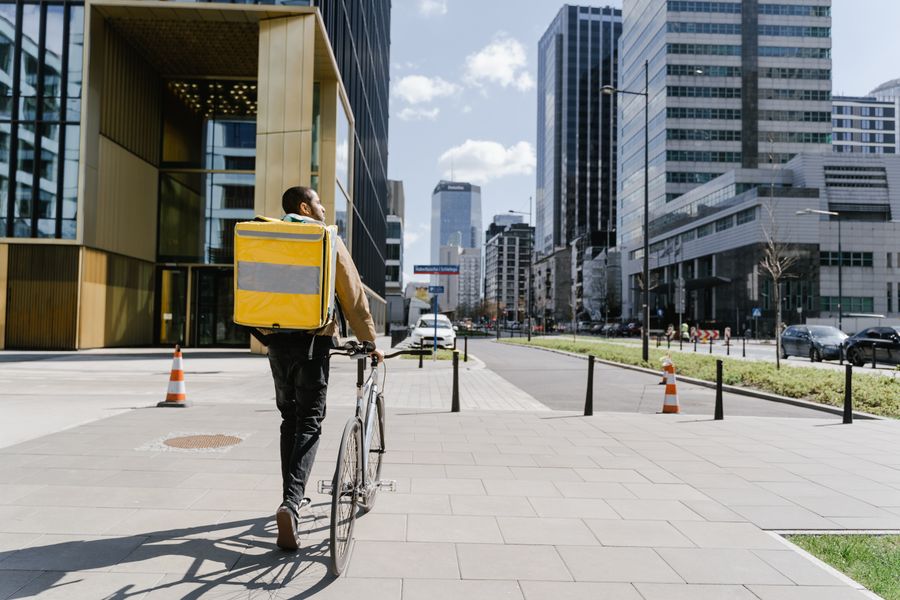
A customer sees “free shipping” and thinks the delivery is handled. A business sees the invoice later and notices the less charming details: residential surcharge, fuel surcharge, address correction, delivery area fee, failed attempt, return label, customer support time. The box may be ordinary, but the route to a private home can be more expensive than the customer imagines.
Residential surcharge exists because home delivery behaves differently from business delivery. An office building can receive ten, twenty, or fifty packages at one reception desk. A neighborhood may require the same driver to stop at ten separate houses, park ten times, walk to ten doors, scan ten labels, and deal with ten different delivery situations. That is not just distance. It is time, labor, uncertainty, and last-mile friction.
This is why the same product can cost a business more to deliver to a house than to an office. The customer may not notice if the store averages the cost into product pricing or hides it inside a free shipping threshold. But for sellers, especially small online stores, those small fees can quietly change the profit on an order.
Why One Office Stop Can Beat Ten Front Doors
Business addresses often make delivery easier because they are designed to receive things. A driver may arrive at a lobby, loading dock, front desk, mailroom, warehouse door, or suite entrance where someone is available during working hours. Even when the building is large, there is usually a system: packages go to reception, security, a mailroom, or a specific floor.
Home delivery is more personal, but that is exactly what makes it messier. A house may have a hidden number, a long driveway, a barking dog, a locked gate, a porch exposed to the street, or a delivery note that says “leave by side door” when there are three side doors. An apartment can be even more complicated: callbox codes, package rooms, leasing offices, broken lockers, elevator access, missing unit numbers, and buildings where “front entrance” is not obvious at all.
The funny part is that the package does not know any of this. On paper, it is just one address. In real life, one address may be a smooth lobby drop-off, while another becomes a five-minute puzzle. Multiply that by thousands of residential deliveries, and the surcharge starts to look less like a random fee and more like a pricing shortcut for extra effort.
The Home-Based Business Surprise
One of the more interesting details is that a business name does not always make an address commercial. Someone can run a candle shop from a garage, manage an online store from a spare bedroom, or receive supplies for a consulting business at home. To the owner, it is a business. To the carrier’s address classification system, it may still be residential.
That surprise can be annoying for small business owners. A package addressed to “Bright Studio Supplies” may look commercial on the label, but if the destination is a private house in a residential neighborhood, the delivery may still be rated as residential. The physical location matters more than the name printed above the street address.
This also matters for sellers shipping to customers who use business names at home. A buyer might enter a brand name, studio name, or shop name because they are ordering for work, but the delivery still goes to a house. If the seller expected a commercial rate, the invoice may not match the estimate. One order is not a disaster, but hundreds of small differences like this can become real money.
Apartments, Lockers, and the “Almost Delivered” Problem
Apartments deserve their own category of delivery drama. Some buildings have excellent package lockers and smooth access rules. Others have a locked front door, no working buzzer, no package room, and residents who write delivery instructions like a treasure map. A parcel can be technically close to the customer and still not easy to deliver.
This is where residential cost becomes more than a surcharge. If a driver cannot access the building, the package may need another attempt. If the unit number is missing, the shipment may be delayed. If a package room is full, the parcel may go to a front desk, locker, local pickup point, or back onto the truck. Each little problem creates extra work for the carrier and extra stress for the customer.
For businesses, these issues often turn into support tickets. “My package says attempted delivery.” “The driver could not enter the building.” “It says delivered, but I do not see it.” “Can you resend it?” The shipping fee is only one part of the cost. The rest is the time spent answering questions, checking tracking, filing claims, replacing items, or calming down someone who needed the package yesterday.
Why Returns Make Residential Delivery Even More Expensive
Residential delivery can hurt twice when returns are involved. First, the business pays to send the order to the customer. Then, if the customer sends it back, the business may pay again for return shipping, inspection, restocking, repackaging, refund handling, or replacement. A product with “free shipping and free returns” may look customer-friendly, but it can be brutal for low-margin items.
This is one reason some stores create minimum order amounts for free shipping. They are not only trying to make customers buy more. They are trying to make delivery math work. A $9 item shipped alone to a residential address can lose money fast after fees, packaging, labor, and possible return costs. A larger order gives the business more room to absorb the delivery expense.
Pickup points and lockers are another practical solution. They are not just a convenience feature; they can reduce failed deliveries, porch theft risk, and scattered last-mile stops. One pickup location can serve many customers, which is much closer to the office-delivery model than sending a driver to every single door.
What Businesses Can Actually Do About It
The best solution is not to punish customers for living in houses. Home delivery is normal, expected, and often the reason people shop online in the first place. The smarter approach is to reduce avoidable problems before they turn into expensive delivery exceptions.
Address validation is one of the easiest wins. A checkout form should catch missing apartment numbers, incorrect ZIP codes, strange formatting, and obvious address issues before the label is created. Delivery instructions should be clear but not ridiculous. “Leave at front desk” is helpful. “Put it behind the blue chair near the second gate but not the side gate” may not be.
Businesses can also offer choices instead of hiding everything behind one shipping button. Customers may choose home delivery, pickup point, locker, office delivery, or slower shipping if the options are explained well. Some customers will still pick home delivery, and that is fine. Others may choose a cheaper or safer option when they understand the difference.
Tracking is part of that strategy too. If a customer can follow the shipment, they are less likely to panic after one missed scan or final-mile delay. For orders moving through DHL services, DHL package tracking helps show whether the parcel is moving normally, waiting for action, or facing a delivery issue.
Residential surcharge is not the most exciting phrase in e-commerce, but the story behind it is very real. Home delivery is convenient for customers because it brings the store to the doorstep. For businesses, it brings a small maze of doors, gates, lockers, returns, address errors, and support questions. The fee is just the visible part of a much bigger last-mile puzzle.