

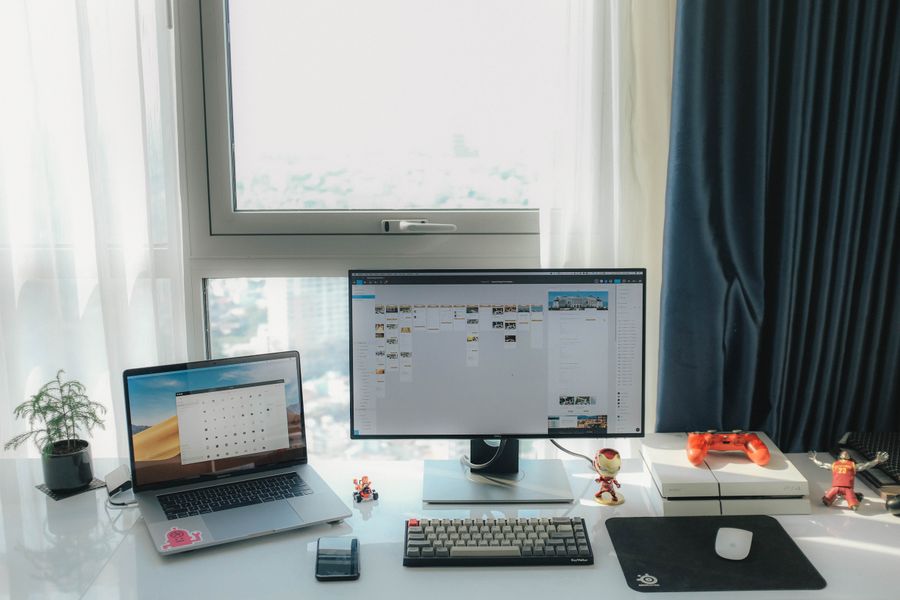
Closing a laptop used to mean something. It meant walking out of an office, getting in a car, physically leaving the building where work happened and arriving somewhere else entirely. Working from home removed almost every single one of those cues at once, and closing the lid now barely registers as an ending at all, since the desk is still right there, the chair is still right there, and the room hasn’t changed in any visible way. A little deliberate office decor turns out to matter more here than most people expect, mainly because it can recreate some of the exact signals a commute used to provide completely for free.
Why the Laptop Closing Doesn’t Feel Like Anything
The brain relies on environmental cues to know when one state ends and another begins, and a laptop lid closing is a weak one on its own, easy to miss entirely. Commuting used to supply a whole sequence of those cues without anyone consciously designing it – leaving a building, moving through a different space, arriving somewhere new that had nothing to do with work. Remove that sequence, and the transition from working to not working has to happen entirely inside one static, unchanging room, which helps explain why so many remote workers report never quite feeling fully off the clock, sometimes hours after they’ve technically already stopped working.
What Actually Signals “Done” to the Brain
Small, repeated physical actions can substitute for a commute reasonably well, as long as they happen consistently every single day at roughly the same time. Turning off a specific desk lamp at the end of the day works because it’s visible, deliberate, and impossible to do halfway. Covering a laptop with a simple wooden stand or tray does something similar, hiding the screen from view rather than just closing it shut on the same open desk. Even physically pushing the chair in creates a small, repeated gesture the brain can eventually learn to firmly associate with the workday actually being over for good.
Building a Closing Ritual Around a Few Objects
None of this needs to be elaborate to actually work over time. Pick just one or two objects – a lamp, a cover, a small tray that holds the laptop once it’s closed for the day – and use them the exact same way every single day without ever skipping the routine. Consistency matters far more here than the specific object chosen, since the brain learns the whole pattern through repetition rather than through any single dramatic gesture performed once and then quickly forgotten.