

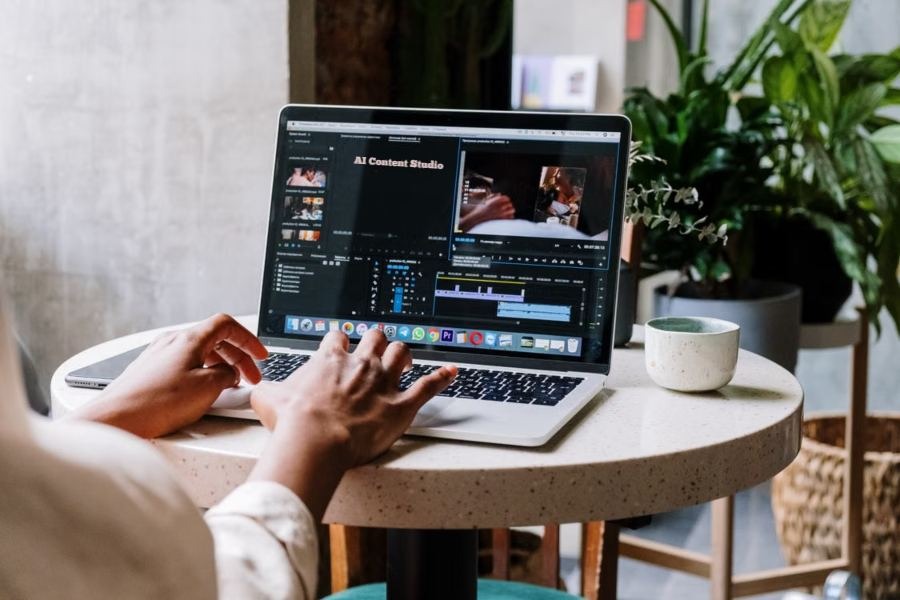
I run a one-person AI content studio where I make short films that are designed for short-form platforms. I don’t have a team, and I don’t rely on traditional production setups. Everything starts from a simple idea and gets built using AI tools step by step. The goal is not just to create videos, but to create clips that actually hold attention.
Most of what I publish is experimental, and I treat each piece like a small test. Over time, this system has helped me understand what actually performs and what gets ignored. The biggest shift for me is realizing that creativity now depends more on systems than resources.
Why I Build Everything as a Solo AI Creator
Content demand has changed the game
Short-form platforms have completely changed how content is consumed. People scroll fast, and attention is the main currency. That means creators need to produce more ideas, test faster, and drop anything that doesn’t work quickly. I used to think production quality was the most important thing, but now I care more about how quickly I can iterate.
AI has removed most production bottlenecks
What used to take a team of editors, animators, and writers can now be done alone. I can move from idea to final video in a few hours instead of days. The real advantage is not automation, but speed of experimentation. I can test different story styles without worrying about cost or setup.
Solo creators now think like studios
The biggest mindset shift is treating myself like a studio instead of a creator. A studio doesn’t rely on inspiration alone. It has a system for producing, testing, and improving content continuously. That’s exactly what AI allows today.
What Actually Makes an AI Short Film Go Viral in 2026
The first three seconds decide everything
If the opening frame doesn’t create curiosity, the video is already lost. I focus heavily on visual hooks, such as unusual motion, unexpected scenes, or emotional tension right at the start. The goal is to interrupt scrolling behavior immediately.
A strong hook usually does one of these:
- Shows something visually impossible or unusual
- Starts in the middle of a situation
- Creates emotional confusion or curiosity
Retention matters more than complexity
A viral short film doesn’t need to be complex. It needs to be watchable until the end. I design every scene to push the viewer forward, even if the story is simple. Fast pacing, clean transitions, and constant visual change help maintain attention.
Consistency makes AI visuals believable
One of the hardest parts of AI filmmaking is keeping visual consistency. Characters, lighting, and style need to feel like they belong in the same world. Without this, the video feels random and breaks immersion.
This is where tools like an AI image generator become useful. I often generate consistent character frames first, then reuse them across scenes instead of starting from scratch each time.
Emotion still drives performance
Even with advanced AI visuals, emotion is what makes people share content. I focus on simple emotional directions like curiosity, nostalgia, wonder, or tension. If a clip doesn’t trigger a feeling, it usually doesn’t perform well.
How I Build AI Short Films Step by Step
Step 1: Starting from ideas that actually have potential
I don’t start with random inspiration. I start with patterns that already work on platforms. Then I combine them with unusual concepts. For example, “lost memories in a digital city” performs better than a generic futuristic city scene because it adds emotional depth.
I usually ask myself:
- What is visually interesting here
- What emotion does this idea trigger
- Can this be explained in under 20 seconds
Step 2: Writing scripts for fast attention
Scripts for short-form content are very different from traditional storytelling. I write for retention, not exposition. That means every line must move the viewer forward.
A typical structure I use:
- First line creates curiosity
- Middle escalates tension or mystery
- Ending gives payoff or twist
I avoid unnecessary explanations. If something can be shown visually, I don’t write it.
Step 3: From script to key visuals using text to image
Once I finish the script, I immediately convert it into visual direction. I don’t treat this as a separate “creative” phase. It’s more like translation work, where I turn words into something the model can actually see.
The first step is using AI to turn text to image, where I generate key frames for each scene. These frames define the world, characters, and emotional tone. I focus heavily on clarity here because vague prompts usually lead to inconsistent outputs.
To keep results stable, I always specify:
- Environment and setting
- Lighting style and time of day
- Camera angle and framing
- Emotional tone of the scene
This step is basically about locking the visual identity before anything moves.
Step 4: From key images to motion using image to video AI
After I have strong key frames, I move into animation using image to video AI or sometimes text to video AI when the scene is simple enough.
This is where static visuals become actual motion scenes. I prefer subtle, controlled movement instead of heavy effects, because too much motion often breaks realism or pulls attention away from the story.
At this stage, I focus on:
- Converting selected key frames into short motion clips
- Adjusting motion strength and camera movement
- Refining outputs until the movement matches the emotional tone
Once this step is complete, I have a set of short AI-generated clips ready to be assembled into a full short film.
Step 5: Assembling and editing short clips into a final film
Once I have multiple generated clips, I move into editing. This is where everything becomes a real short film instead of isolated AI outputs. I treat editing as storytelling through rhythm, not just cutting footage together.
I usually start by arranging clips in the order of emotional intensity rather than chronological order. Some scenes are shortened, others are extended slightly, depending on how they affect pacing. The goal is to keep attention rising, not just moving forward.
Then I focus on transitions and flow. Even simple cuts can feel powerful if the timing is right. I remove anything that slows down the experience, even if the visuals look good on their own. Finally, I layer sound and adjust pacing so the entire piece feels like one continuous emotional arc.
At this stage, I’m essentially doing:
- Selecting the strongest AI-generated clips
- Cutting and sequencing them into a coherent story
- Adjusting rhythm, transitions, and pacing for retention
This is where the raw AI output becomes a finished short film ready for publishing.
At these stages, I often rely on Loova as my main platform for generating and assembling AI short films. It’s an all-in-one platform that brings together most of the tools I would otherwise need across different parts of the production process. What makes it especially useful for me is that it connects image generation and video generation in a single place, which significantly reduces friction when I’m rapidly iterating on different short film ideas and visual styles.
Step 6: Publishing with platform behavior in mind
Each platform has its own logic. What works on TikTok may not work on YouTube Shorts. I adjust captions, timing, and even frame selection depending on where I publish.
Sometimes I also test variations of the same video to see which hook performs better.
Types of AI Short Films I Make
Narrative micro stories
These are short emotional stories with a clear beginning and end. They usually focus on one idea or conflict and resolve quickly. They perform well because they are easy to understand.
I like using them when I want to test how far a simple emotional idea can carry a full clip. Most of the time, the strongest ones are built around a single emotional shift rather than multiple plot points.
Cinematic aesthetic clips
These are more visual than narrative. The goal is mood rather than story. I use them to test visual styles and build audience interest through aesthetics. They often act like visual experiments where I explore lighting, color, and camera movement without worrying about plot structure.
When they work, it’s usually because the mood connects instantly with the viewer in the first few seconds.
Experimental visual concepts
These clips are designed to explore unusual ideas. For example, a world where time moves differently in each room. These don’t always go viral, but they often perform well in niche communities.
I treat them as a way to push creative boundaries and see how far AI visuals can go conceptually. Even when they don’t perform well, they usually generate useful insights for future narrative ideas.
Character driven series content
I sometimes reuse characters across multiple videos. This builds familiarity and helps viewers recognize patterns. It also improves long-term engagement.
Over time, audiences start to expect new situations involving the same characters, which naturally increases return viewership. This format also makes it easier for me to build consistency in visual identity and storytelling tone.
Common Mistakes I See in AI Short Films
- Overcomplicated ideas. Many creators try to build too much into a short clip. The result is confusion. Simple ideas almost always perform better.
- Beautiful visuals without direction. A visually impressive video is not enough. Without a clear emotional or narrative direction, viewers lose interest quickly.
- Weak opening moments. If the hook is not strong, nothing else matters. I’ve tested this many times. Even great videos fail if the first three seconds are weak.
- No pacing control. Some videos feel too slow or too chaotic. Good pacing is what keeps people watching until the end.
Results and What I Learned Running This Process
The biggest change for me is speed. I can now test ideas daily instead of weekly. This allows me to learn faster than before. I also realized that consistency beats perfection in short-form content.
Another key insight is that algorithms respond better to repeated experimentation. The more variations I produce, the clearer the pattern becomes.
Tools like Loova have made it easier to move from script to motion without waiting for complex production steps. This reduces friction and increases output.
Most importantly, I learned that creativity is not about waiting for ideas. It is about building a system where ideas can be tested quickly.
Final Thoughts
Running a one-person AI content studio feels less like filmmaking and more like designing a creative engine. I don’t wait for inspiration anymore. I build, test, and refine continuously. AI didn’t replace creativity, but it changed how I execute it. Now the real advantage is not resources, but how fast you can turn ideas into something people can watch and react to.
The future of short-form content belongs to creators who can combine storytelling with systems thinking. That’s where I focus my energy every day.
FAQ
What is an AI content studio?
It is a system where a single creator uses AI tools to handle scripting, visuals, editing, and publishing for digital content production.
Can one person really create viral AI short films?
Yes. With modern AI tools, one person can handle the entire production process and test ideas quickly enough to compete with larger teams.
What tools are most important for AI short films?
The key tools include AI scripting assistants, visual generation tools, video editing platforms, and motion tools like image to video systems.
How long should AI short films be?
Most perform best under 20 seconds, especially on short-form platforms where retention is critical.
Do I need storytelling skills for AI videos?
Yes. AI handles execution, but storytelling determines whether viewers stay or scroll away.
How do I increase chances of virality?
Focus on strong hooks, fast pacing, emotional clarity, and constant testing of different variations.